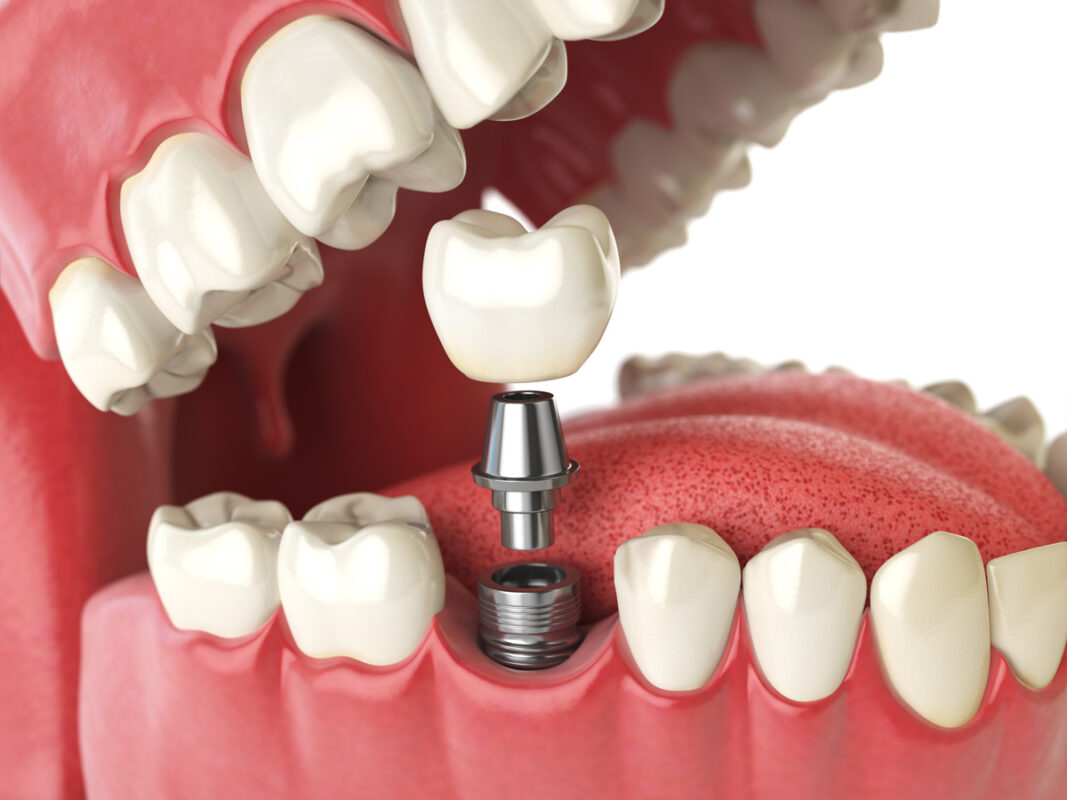
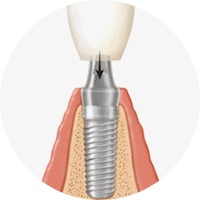
Implants are a modern and completely biocompatible way to replace missing teeth without damaging their existing neighboring teeth.
With the implants, individual cases and bridges can be made that are permanently placed in the mouth and do not come out again, but also gums that come in and out of the mouth, but rest very strongly on the implants, so that the patient does not worry that they will leave when talking or eating. .
It is important to know that you do not need to replace every missing tooth with the same number of implants. Many times 4 to 6 implants are enough to restore the teeth of an entire jaw, that is 10 to 12 teeth.
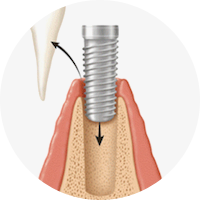
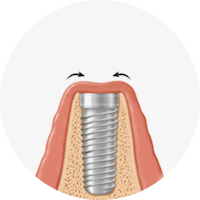
First, the bone is exposed in the area of the jaw from where the tooth is missing. A hole is then made in the bone (well) into which the implant is placed. The gums are then sutured over the implant and the wound is left to heal for a few months. This procedure is performed under local anesthesia.
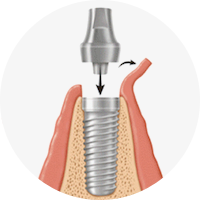
After the healing process is completed, then the artificial tooth is placed on the dental implant. The implants are made mainly of titanium, a material that has been shown to bond with the surrounding bone. This biological process is called osteointegration and takes a few months.
The quantity and quality of bone that the implant will receive is a determining factor in the placement or not of the dental implant. Like any oral procedure, the implant requires proper oral hygiene on the part of the patient. Smoking is also a deterrent to success.